90s Arcade Nostalgia: That Wild Carpet, Token Pockets, and High-Score Dreams
If 90s arcade nostalgia had a smell, it would be pizza, soda, and warm electronics — and if it had a pattern, it would be that carpet. You know the one: black background, neon squiggles, confetti triangles, and shapes that looked like a geometry test threw a party. It hid every spill, every dropped topping, and possibly a few lost tokens, which was exactly the point.
For a lot of us, the arcade was not just a place to play games. It was a weekly economy, a social network, and a training ground for patience, all measured in quarters.
Why 90s Arcade Nostalgia Starts With the Carpet
That carpet was doing serious work. The loud pattern camouflaged crumbs and soda splashes, made a dim room feel electric, and told your brain, instantly, that you were somewhere fun. No plain floor could compete with a design that matched the energy of flashing lights and victory jingles.
It was also a landmark. You could be dropped off at the door, spot that familiar swirl under your sneakers, and know exactly where the good machines were. Left for racing, back wall for the classics, and front and center for whatever game had a line three kids deep.
The Token Economy Taught Real Life Skills
Arcade math was ruthless and educational. Four tokens for a dollar meant every choice mattered: spend it all on one new game you would lose in ninety seconds, or stretch it out on a favorite you could actually beat? That was budgeting, risk management, and emotional regulation in one small brass coin.
- The pocket check: Shaking your jeans for one last token was a ritual — and occasionally, a miracle.
- The continue countdown: Ten seconds to decide if your pride was worth another quarter. It usually was.
- The high-score initials: Three letters, immortal until someone better showed up or the machine got unplugged.
- The spectator sport: Watching a stranger crush a level you could not pass was free entertainment and a masterclass.
We also learned to wait our turn, to put a token on the machine to claim next game, and to celebrate someone else’s win like it was our own. Mostly because we wanted them to hurry up and lose so we could play.
Games Were Better When You Had to Show Up
There was no download, no update, and no playing from the couch. If you wanted the good cabinet, you had to be there, in person, with your friends squeezed in close enough to argue about strategy in real time. Losing meant watching your character fade while everyone groaned — winning meant actual witnesses.
That shared, slightly sticky-floored experience is a big reason this era sticks with us. The games were great, but the room made them legendary: the sounds overlapping, the prize counter glowing in the corner, and the feeling that one more token might change everything.
Bringing That Feeling Home
You cannot easily recreate the carpet — and honestly, your landlord or your better judgment probably should not let you try. But you can wear the era, decorate with it, and gift it to the person who still brags about a high score from 1996.
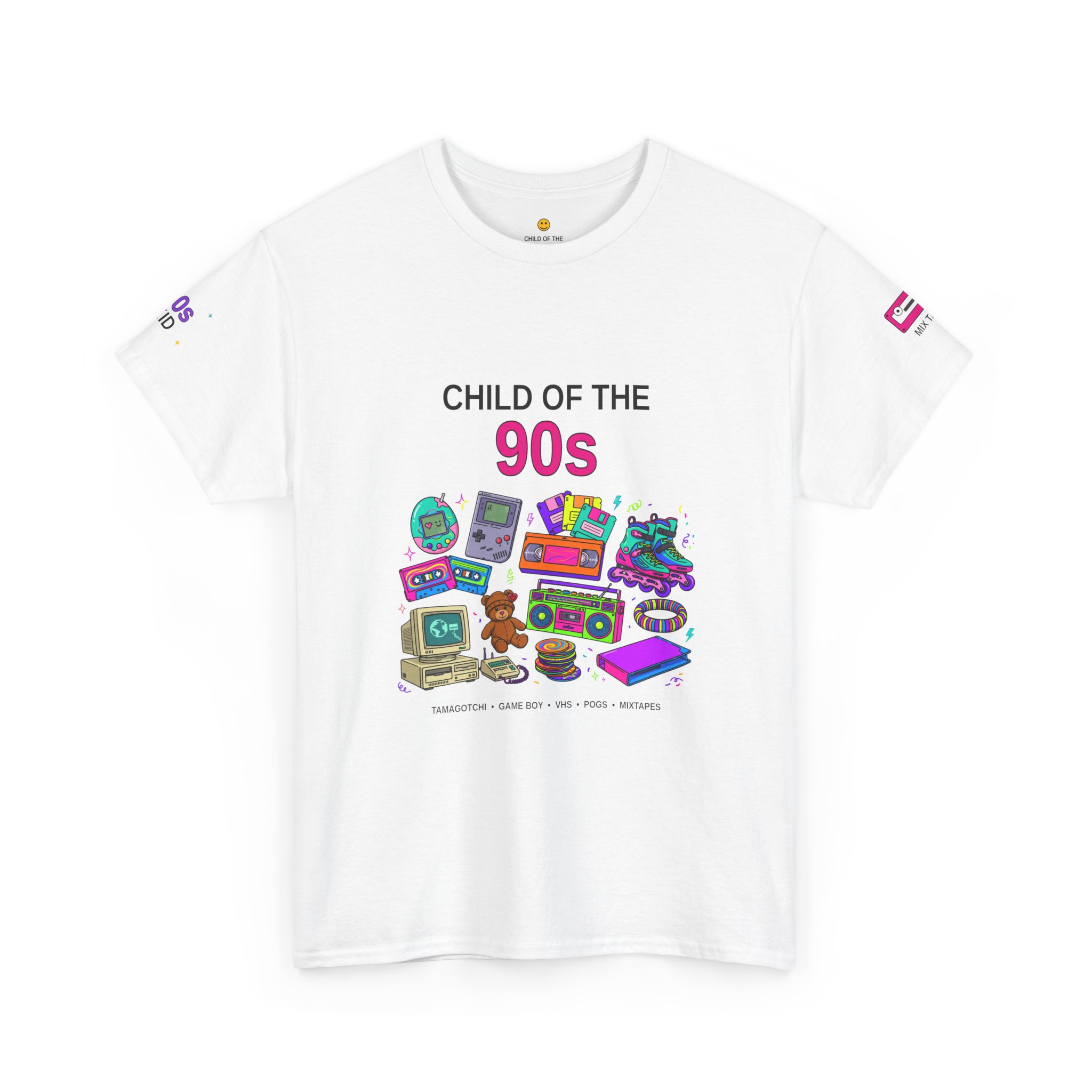
Our Child of the 90s shirt with its retro collage of handheld games, cassettes, and VHS tapes is built for exactly that feeling. Browse more in the shop for funny retro and nostalgia gear, or find the same eye-roll-worthy designs in our Etsy shop, ApparelisHowEyeRollU.
Next time you see that neon carpet pattern in the wild, take a second. Somewhere under the squiggles is a kid with a pocket full of tokens, absolutely convinced the next game is the one. For most of us, that kid never really logged off.